
Can Squirrels Burn Down Your House? The Hidden Fire Risk You Need to Know
January 15, 20248 min read
It sounds like something out of a disaster movie, but it’s a real risk that homeowners in Hamilton, Brantford, and across Southern Ontario face every year: squirrels causing house fires. These seemingly harmless creatures can turn your attic into a fire hazard by chewing through electrical wiring, creating sparks and short circuits that could lead to catastrophic damage.
If you’ve been hearing scratching sounds above your ceiling or noticed suspicious activity around your roofline, you’re right to be concerned. Let’s explore how squirrels can actually start fires, what warning signs to watch for, and how to protect your home from this often-overlooked danger.
Concerned About Squirrels in Your Attic?
Our team provides fast, humane squirrel removal services in Hamilton and Brantford. Don’t wait until it’s too late.Call Now: 1-888-400-3964
The Reality: Yes, Squirrels Can Cause House Fires
While house fires caused solely by squirrels are relatively rare, they’re far from impossible. The scenario isn’t about squirrels deliberately setting fires—it’s about their natural behavior creating dangerous conditions that can ignite flames.
When squirrels nest in your attic or walls, they bring two major fire risks with them:
- Electrical wire damage: Squirrels chew through wiring insulation and even the copper conductors themselves, creating exposed wires that can spark
- Highly flammable nesting materials: They gather dried leaves, twigs, paper, and shredded insulation—all perfect kindling if a spark occurs
The combination of damaged electrical systems and combustible materials creates a perfect storm for potential fire hazards. In fact, it’s estimated that rodents (including squirrels) cause between 8-25% of unexplained house fires, according to insurance industry data.
Why Do Squirrels Chew on Electrical Wires?
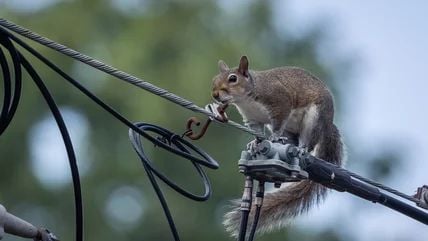
Understanding squirrel behavior is key to grasping why they pose such a risk. Squirrels, like all rodents, have incisors that never stop growing throughout their entire lives. To keep their teeth from becoming overgrown and unmanageable, they need to constantly gnaw on hard materials.
Here’s the problem: squirrels aren’t picky about what they chew. They’ll happily gnaw on:
- Wooden beams and support structures
- PVC and plastic pipes
- Electrical wiring (both the insulation and the copper inside)
- Cable lines and phone wires
- Anything else that helps file down their teeth
When squirrels discover the wiring in your attic, they don’t recognize the danger. To them, it’s just another material that satisfies their biological need to chew. Unfortunately, this innocent behavior can strip away protective insulation, expose live wires, and create conditions ripe for electrical shorts and sparks.
Real-World Examples: When Squirrels Caused Power Problems
To understand the scope of squirrel-related electrical issues, you don’t need to look far. In May 2024, Toronto Hydro reported that a single squirrel caused a power outage affecting 6,500 customers in downtown Toronto after getting into electrical equipment.
And that’s just infrastructure. Inside homes, the damage can be even more personal and devastating:
Case Study: The Hamilton Homeowner
A Hamilton homeowner attempted DIY squirrel removal and sealed their attic entry point without confirming all animals were out. The trapped squirrels, desperate to escape, went into overdrive chewing through attic wiring, including spotlight circuits and doorbell wires. By the time a professional wildlife removal team was called, the damage to the electrical system was extensive, and the fire risk had increased dramatically.
The Lesson: Amateur removal attempts often make the problem worse and can create even more dangerous situations.
Warning Signs That Squirrels Are in Your Attic
Early detection is your best defense against fire risk. If you notice any of these warning signs, it’s time to call a professional wildlife removal service:
🔊 Strange Noises
Scratching, scurrying, chewing or thumping sounds in your attic, especially during dawn and dusk when squirrels are most active
👁️ Visible Damage
Chewed holes in soffits, fascia boards, or roof vents; damaged shingles or loose flashing
💡 Electrical Issues
Flickering lights, circuit breakers that trip frequently, or outlets that stop working for no apparent reason
🌳 Tree Branch Access
Overhanging branches within 6-8 feet of your roofline provide superhighways for squirrels to access your home
🔍 Droppings & Nests
Small droppings in your attic or visible nesting materials made from insulation, leaves, and twigs
👃 Unusual Odors
Strong, musky smells or the scent of urine coming from your attic space
The moment you suspect squirrels have moved into your home, time is of the essence. Every day they remain increases the potential for electrical damage and fire risk.
How Squirrels Actually Get Into Your House

Squirrels are surprisingly resourceful when it comes to finding entry points into your attic. Understanding these vulnerabilities helps you protect your home:
Common Entry Points:
- Roof vents: Plastic or aluminum vents are easy for squirrels to chew through
- Soffit intersections: Gaps where soffits meet the roofline are prime targets
- Fascia boards: Damaged or rotting fascia can be easily enlarged by gnawing
- Gable vents: Decorative vents often lack proper screening
- Chimney caps: Missing or damaged caps allow direct access
- Tree branches: Overhanging limbs provide launching pads straight to your roof
In semi-detached homes or townhouses, the problem can be even more complex. A single entry point can allow squirrels to travel between connected units, spreading the infestation and fire risk across multiple households.
The Fire Triangle: How Squirrel Damage Creates Perfect Conditions
Any fire needs three elements to ignite: fuel, oxygen, and an ignition source. Unfortunately, squirrel infestations can provide all three:
The Fire Triangle in Your Attic:
- Ignition Source: Exposed electrical wires create sparks when they short circuit
- Fuel: Nesting materials (dried leaves, paper, shredded insulation) are highly flammable
- Oxygen: Attic spaces are well-ventilated by design, providing plenty of oxygen to feed flames
What makes attic fires particularly dangerous is that they can smolder for hours or even days before being detected. By the time smoke reaches living areas, the fire may have already compromised structural elements and spread throughout the roof cavity.
Prevention: How to Protect Your Home from Squirrel-Related Fires
The good news? Squirrel-related fire hazards are entirely preventable with the right approach. Here’s how to protect your Hamilton or Brantford home:
1. Regular Property Maintenance
- Trim tree branches: Keep all branches at least 6-8 feet away from your roofline
- Inspect your roof: Check for damage to vents, soffits, and fascia boards quarterly
- Repair promptly: Fix any holes, cracks, or damaged areas immediately
- Check your chimney: Ensure your chimney cap is secure and intact
2. Professional Wildlife Inspections
Our wildlife inspection services include a thorough assessment of your property to identify vulnerabilities before they become problems. We check areas that homeowners often miss, including difficult-to-reach spots on rooflines and behind soffits.
3. Preventative Sealing and Exclusion
Once potential entry points are identified, preventative sealing work ensures squirrels can’t get in. This includes:
- Installing heavy-duty screening over vents
- Reinforcing vulnerable areas with metal flashing
- Sealing gaps and cracks with materials squirrels can’t chew through
- Installing one-way exclusion devices if animals are present
4. Remove Attractants
Make your property less appealing to squirrels:
- Remove bird feeders or switch to squirrel-proof models
- Clean up fallen nuts, fruits, and seeds from your yard
- Secure garbage cans with tight-fitting lids
- Don’t leave pet food outdoors
Why DIY Squirrel Removal Is Dangerous
We completely understand the temptation to save money by handling wildlife removal yourself. However, DIY approaches frequently backfire and create more serious problems:
Risks of DIY Removal:
- Trapping animals inside: Sealing entry points before all squirrels are out leads to desperate, destructive behavior
- Incomplete removal: Missing a second entry point means squirrels simply return
- Baby squirrels: Removing mothers during breeding season leaves orphaned babies that will die in your walls
- Injury risk: Cornered squirrels can bite and scratch, potentially transmitting diseases
- Legal issues: Ontario has specific regulations about wildlife removal that must be followed
- Increased fire risk: Panicked, trapped animals cause exponentially more wire damage
Professional wildlife removal services have the experience, tools, and knowledge to remove squirrels safely and humanely while preventing re-entry. We guarantee our work, giving you peace of mind that the problem is actually solved.
What Happens During Professional Squirrel Removal?
Understanding our process helps homeowners feel confident in choosing professional help:
1. Thorough Inspection
We conduct a complete assessment of your property, identifying all entry points, assessing damage, and determining the extent of the infestation.
2. Humane Removal
Using one-way exclusion devices, we allow squirrels to leave naturally but prevent them from returning. This ensures no animals are trapped inside.
3. Entry Point Sealing
Once all animals are confirmed out, we seal every entry point with materials designed to withstand gnawing—metal screening, heavy-gauge mesh, and reinforced flashing.
4.Damage Assessment
We inspect wiring, insulation, and structural components for damage. If electrical wiring has been compromised, we recommend having a licensed electrician inspect the system.
5. Prevention & Warranty
We provide recommendations for ongoing prevention and back our work with a warranty, ensuring you’re protected if any issues arise.
The Cost of Waiting: Why Immediate Action Matters
Many homeowners hesitate to call for professional help, thinking the problem might resolve itself or hoping to save money. Unfortunately, delaying action almost always costs more in the long run:
- Electrical repairs: Rewiring damaged circuits can cost thousands of dollars
- Insulation replacement: Contaminated insulation must be removed and replaced
- Structural damage: Prolonged infestations can compromise wooden beams and roof decking
- Insurance complications: Many policies don’t cover gradual damage from pests
- Fire damage: The potential cost of a house fire is incalculable
Early intervention by a professional wildlife removal company is always more affordable than dealing with extensive damage later.
Additional Wildlife That Pose Fire Risks
While this article focuses on squirrels, they’re not the only wildlife that can create fire hazards in Southern Ontario homes:
- Raccoons: These clever animals can tear through insulation and damage wiring while creating nests in attics. Learn more about our raccoon removal services.
- Mice and rats: Like squirrels, these rodents have constantly growing teeth and will chew on electrical wires. Our rodent removal services can help.
- Bats: While bats don’t chew wires, their droppings (guano) are corrosive and can damage electrical components over time.
- Birds: Nesting materials in vents can block airflow and create fire hazards, especially near dryer vents.
Any wildlife living in your home poses potential risks that extend beyond just the nuisance factor.
Frequently Asked Questions
How common are house fires caused by squirrels?
While exact statistics are difficult to pin down (many fires of unknown origin may involve rodents), insurance industry estimates suggest that rodents, including squirrels, contribute to 8-25% of fires with unknown causes. The risk is real but preventable with proper wildlife management.
Will homeowners insurance cover damage from squirrels?
It depends on your policy. Most standard homeowners insurance covers sudden damage (like a fire), but may not cover gradual damage from pest infestations. Review your policy carefully and consider adding additional coverage if you live in an area prone to wildlife intrusions.
Can squirrels chew through metal?
While squirrels have powerful teeth, they generally cannot chew through properly installed heavy-gauge metal screening or flashing. This is why professional exclusion work uses metal materials rather than plastic or wood, which squirrels can easily gnaw through.
What time of year are squirrels most likely to enter homes?
Squirrels seek shelter in homes year-round, but activity peaks during two main periods: late winter/early spring (breeding season) and fall (when they’re seeking warm winter shelter). However, problems can occur any month of the year.
How long does professional squirrel removal take?
The timeline varies depending on the situation. Initial inspection and exclusion device installation typically happens in one visit. The squirrels leave on their own over the next few days, and we return to permanently seal entry points and complete the work. The entire process usually takes 1-2 weeks.
Is squirrel removal humane?
At First Class Wildlife Removal, we use exclusively humane, ethical methods. We never use poisons or kill traps. Our one-way exclusion devices allow animals to leave safely but prevent re-entry, and we always ensure we’re not separating mothers from dependent babies.
Natural Squirrel Deterrents: Do They Work?
You’ll find plenty of home remedies and natural deterrents recommended online. Here’s what actually works (and what doesn’t):
Methods with Limited Effectiveness:
- Cayenne pepper or hot pepper sprays: May temporarily deter squirrels from specific areas, but rain washes it away and it won’t stop determined animals
- Predator decoys (fake owls, etc.): Squirrels quickly realize these don’t move and ignore them
- Ultrasonic devices: Little scientific evidence supports their effectiveness, and squirrels often adapt to the sounds
- Moth balls: Not effective against squirrels and can be toxic to humans and pets
Methods That Can Help as Part of a Comprehensive Approach:
- Tree trimming: Actually works by removing access routes
- Removing food sources: Reduces your property’s appeal to squirrels
- Proper screening and barriers: Physical exclusion is the only guaranteed prevention
The bottom line: deterrents might help reduce squirrel activity in your yard, but they won’t remove squirrels already living in your attic, and they won’t prevent determined animals from finding a way in. Professional exclusion work is the only reliable solution.
Taking Action: Protect Your Hamilton or Brantford Home Today
The question “Can squirrels burn down your house?” has a clear answer: yes, they can create conditions that lead to electrical fires. But here’s the good news—this risk is entirely preventable with prompt action and professional help.
If you’re hearing noises in your attic, seeing signs of wildlife activity, or simply want peace of mind that your home is protected, don’t wait. Every day that squirrels remain in your home increases the potential for costly damage and safety risks.
First Class Wildlife Removal: Your Local Experts in Hamilton and Brantford
As a local, owner-operated company, we’ve been protecting Southern Ontario homes from wildlife intrusions for over a decade. Our team provides:
- ✓ Free estimates, and on site inspections
- ✓ Humane, ethical wildlife removal
- ✓ Comprehensive exclusion and prevention work
- ✓ Warranties that back our work
- ✓ Same-day emergency service available
Don’t let squirrels put your home and family at risk. Call us today for a free assessment.
Call Now: 1-888-400-3964Request Free Estimate
Proudly Serving:
Hamilton • Brantford • London • Ancaster • Dundas • Stoney Creek • Burlington • Grimsby • Paris • And surrounding areas across Southern Ontario