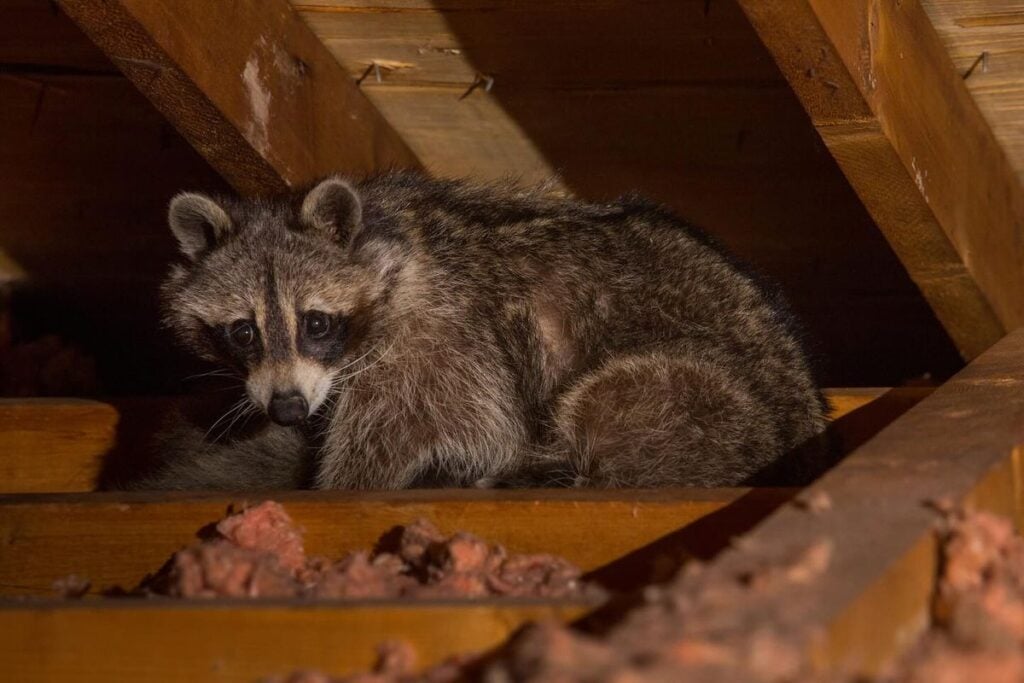
The raccoon, squirrel, or bat is gone. That part feels like a win. Then you climb up with a flashlight and see what’s left behind: flattened, stained insulation, dark trails of droppings, and a smell that gets worse the longer it sits. This is the part of wildlife removal most homeowners in Hamilton and Brantford don’t think about until they’re standing in the attic wondering what to do next.
Why Animals Leave More than Just a Mess
Raccoons and squirrels compress insulation into nests, matting it down until it stops trapping air the way it should. A family of raccoons can flatten a wide patch of insulation in a single season, and that flattened section stops doing its job even after the animals are gone.
Bats are a different problem. A bat colony roosting in a soffit or ridge vent leaves behind guano that builds up in layers under the roosting spot, and it doesn’t dilute or wash away on its own. Urine and droppings from any of these animals soak into insulation and the wood or drywall underneath, and once that happens, insulation alone can’t be cleaned. It has to come out.
The Health Side Nobody Wants to Think About
Raccoon feces can carry roundworm eggs that stay infectious in dust for a long time, which is why we don’t recommend homeowners bag up old insulation themselves without a mask and gloves at minimum. Mouse and rat droppings carry their own risks too, and rodent contamination in general is one of the more common reasons people finally call us instead of handling an infestation on their own.
None of this means panic. It means the cleanup step isn’t optional once wildlife has been living in that space for weeks or months.
Assessing the Extent of Wildlife Damage
Every wildlife situation is different, so the amount of cleanup and restoration needed depends on the condition of the attic and how long animals have been present. When an attic is assessed as part of the restoration process, factors such as damaged or contaminated insulation, signs of urine and droppings, wildlife entry points, and any roofline or structural repairs are taken into account. These findings help determine the scope of work needed to restore the attic and reduce the risk of future wildlife problems.
Addressing both the damage and the points where animals gained access is an important part of a long-term solution. Simply replacing insulation without resolving the underlying cause can leave your home vulnerable to repeat infestations and additional damage.
How the Removal and Cleanup Actually Happens
Our attic cleanup and repair service starts once the animal is confirmed gone. The contaminated insulation gets bagged and hauled out, whether that’s blown-in cellulose, batts, or a mix from patch repairs over the years. We treat the exposed area with an enzyme-based cleaner and disinfectant to break down waste residue and cut the odour at the source, not just mask it. Anything porous that soaked through, like drywall or exposed wood, gets addressed at this stage too.
Once the space is dry and treated, we install new insulation to bring the attic back to a proper R-value for the home. We don’t move forward with re-insulating until entry points are sealed, because putting fresh insulation under an open gap just resets the clock on the same problem.
What Determines the Cost
Attic insulation removal pricing depends mostly on square footage and how contaminated the space is. A raccoon that denned in one corner for a few weeks is a smaller job than a bat colony that’s been roosting for a full season, or a squirrel family that’s been nesting through two litters. Roof access, insulation type, and whether repairs are needed alongside the cleanup all factor in as well.
We can often provide a rough ballpark estimate over the phone based on the information you share, giving you a general idea of what to expect. To prepare an accurate quote, however, we first complete an inspection to assess the property, identify the extent of the wildlife damage, and determine the scope of work. This allows us to recommend the right cleanup, repairs, and restoration services without relying on guesswork.
Signs You’re Already Past the Point of a Simple Cleanup
- Insulation that’s visibly flattened, matted, or stained in patches
- A persistent ammonia-like or musty smell that lingers after the animal is removed
- Soft or discoloured drywall on the ceiling below the attic
- Visible droppings scattered across a wide area rather than one spot
- Chewed wiring, vents, or insulation paper backing
If you’re noticing any of these after a confirmed removal, it’s worth having someone look before you close that access hatch and forget about it. We’ve seen homeowners skip this step and end up dealing with the smell again the following summer once the attic heats up.
Why Cleanup and Prevention Go Together
We don’t recommend insulation replacement without also addressing how the animal got in. Our sealing and prevention service covers the gaps, damaged vents, and roofline weak points that let raccoons, squirrels, and other animals back into the attic in the first place. Doing the cleanup without the sealing is a bit like replacing carpet under a leaky roof. It looks fine until the same problem shows up again.
For homeowners who aren’t sure whether an animal is still active or if it’s just leftover mess, a wildlife inspection is the right first step. Our technicians can confirm the attic is clear before any cleanup work starts, so you’re not paying to remove insulation while something is still living up there.
What This Looks Like Once it’s Done
A finished attic restoration should leave you with no lingering odour, insulation that’s properly distributed at the right depth, and sealed entry points so the same animal, or the next one looking for a warm spot, can’t get back in. We’ve been doing this across Hamilton, Brantford, and the surrounding towns for over a decade, and the attics that stay animal-free are almost always the ones where cleanup and sealing happened together, not as two separate projects months apart.
If wildlife has already been dealt with and you’re staring at the aftermath, reach out to us for a free estimate. We’ll tell you honestly whether you’re looking at a partial cleanup or a full insulation replacement, and what it will take to keep the attic that way.